
Best Planners for Adults Who Want Less Mental Clutter
A planner should reduce background noise, not become another lifestyle project. The best options support a simple weekly rhythm you can keep using when life gets crowded.
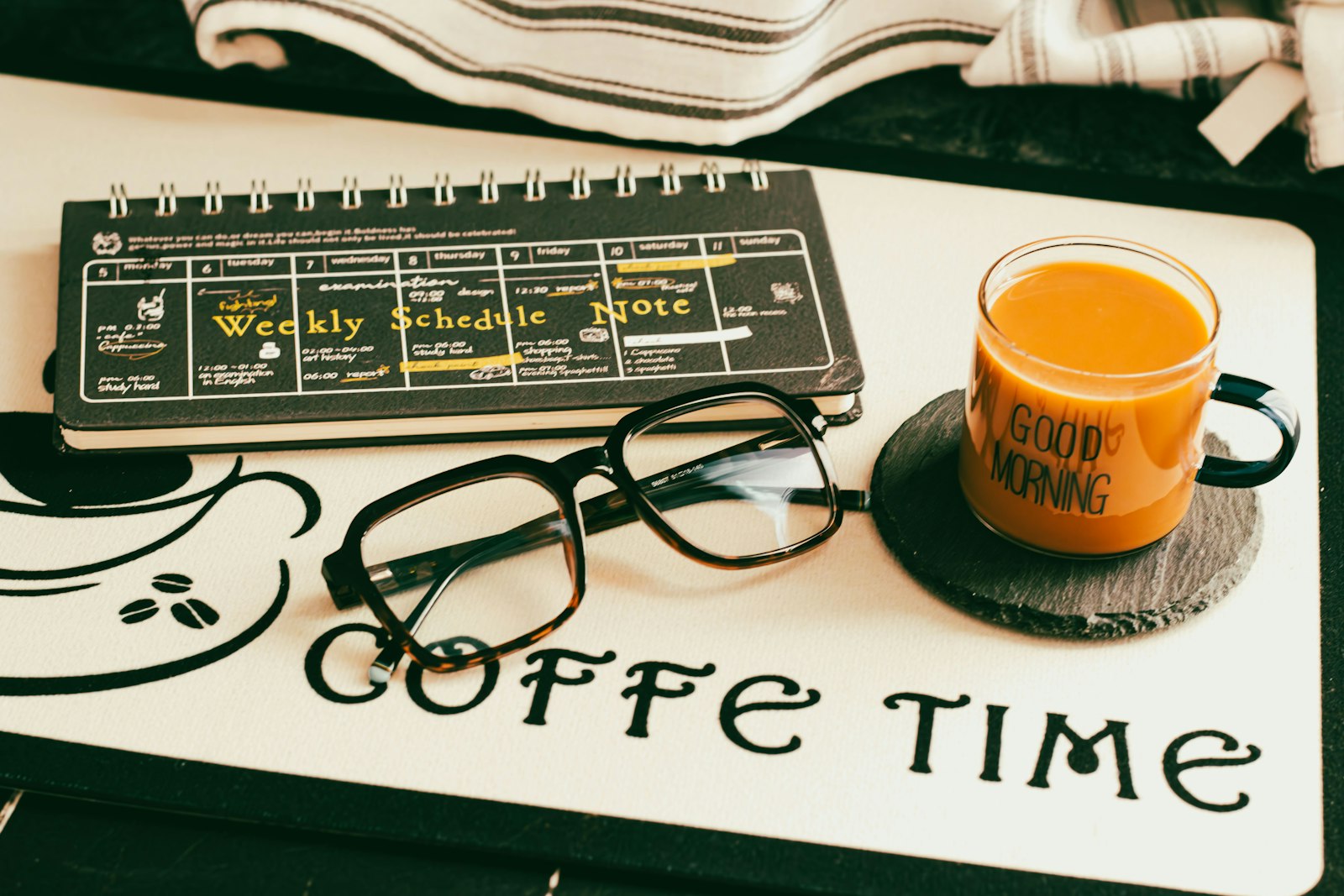
In an era dominated by notifications, pings, and glowing rectangles, the humble paper planner is experiencing a major renaissance. For many high-performing adults, the act of putting pen to paper isn't about nostalgia; it is a tactical decision to reclaim focus. At RetireGoal, we view a planner not as a place to record the past, but as a scaffold for building the future.
The Cognitive Science of Writing: Why Paper Beats Digital for Planning
Why does paper still work? Research into "embodied cognition" suggests that the physical act of writing by hand engages the brain in a way that typing does not. When you write a goal, your brain has to process the spatial orientation of the letters, the pressure of the pen, and the tactile feel of the paper. This creates a stronger neural trace, making you more likely to remember and follow through on your commitments.
Furthermore, a paper planner provides a Single-Tasking Environment. When you open your planner, there are no tabs to click, no emails to check, and no "breaking news" alerts. It is just you and your time. It forces a "Cognitive Slowdown" that is essential for strategic thinking. In a digital calendar, it's too easy to click "New Event" and fill your day without considering the energy cost. On paper, when you physically ink in a 4-hour block, you feel the weight of that commitment.
The "Analog vs Digital" Peace Treaty
The most common question we get at RetireGoal is: "Do I have to give up Google Calendar?" The answer is a firm No. In fact, trying to manage your entire life *only* on paper is just as stressful as doing it only digitally.
We recommend a hybrid "Peace Treaty" system: 1. Digital is for the "Hard Landscape": Use your digital calendar for appointments, flights, and meetings—things that have a fixed time and place. This allows for alerts and shared visibility with your team or partner. 2. Paper is for the "Actionable Day": Use your planner to decide *how* you will spend the gaps between those meetings. Your planner is your strategy for the next 24 hours. If your digital calendar says "Meeting at 2 PM," your paper planner says "10 AM - 12 PM: Deep Work on Q4 Report (No Slack)."
Choosing Your Layout: The Three Standard Temples
The first decision in choosing a planner is the "Temporal View." How does your brain like to see time?
1. The Weekly View (The "Strategist")
This is the most popular layout for busy professionals. It shows you the entire week on a two-page spread.
- Best for: People who need to balance multiple projects and see how their Wednesday meetings affect their Friday deadlines. It allows for "Horizontal Thinking"—seeing the flow of the week as a single unit.
- The Benefit: It prevents "Wednesday Overload" because you can see that you've already committed your energy elsewhere. It helps you spot "open air" in your schedule where real work can happen.
2. The Daily View (The "Tactician")
The daily layout gives you one full page (sometimes two) for a single day.
- Best for: Those with extremely dense schedules or people who use "Interstitial Journaling" (writing small notes throughout the day). It’s also ideal for those in high-stress roles where the "Big Picture" is handled by a team and the individual needs to focus on granular execution.
- The Benefit: It provides ample space for task lists, meeting notes, and gratitude prompts. However, the downside is that it’s easy to lose sight of the week's trajectory when you’re zoomed in so closely on a single 24-hour block.
3. The Monthly View (The "Visionary")
While most planners include a monthly view, some people use only a monthly view for high-level milestone tracking.
- Best for: Tracking travel, birthdays, and major project deadlines. It is rarely enough for daily management but is essential for "Long-Range Planning" and "Annual Rhythm."
Deep Dive: The Heavy Hitters of the Planner World
The Hobonichi Techo: The Japanese Masterpiece
If you spend any time in the "Planner Community," you will hear the name Hobonichi. It is a Japanese planner known for using Tomoe River Paper.
- The Logic: It uses a subtle "Grid" system that provides structure without being intrusive. The paper is exceptionally thin yet handles almost any ink without bleeding through.
- The Operator's View: The Hobonichi *Cousin* (A5 size) is the RetireGoal choice for those who want a Daily page but also a Weekly vertical view in the same book. It is a masterclass in efficiency, allowing you to track your hourly schedule on one page and your creative notes on the next.
The Full Focus Planner: The Performance Engine
Created by Michael Hyatt, the Full Focus Planner is a "System" in a book. It is designed around the "Big Three" daily goals.
- The Logic: It operates on a 90-day cycle. Life changes too fast for 12-month goals to remain relevant. By using a new book every quarter, you force a "Review and Reset" of your priorities.
- The Operator's View: This planner is for the person who feels "busy but not productive." It forces you to identify the three tasks that will move the needle, and if you do nothing else, you've succeeded.
The Bullet Journal (BuJo) Method: The Ultimate Customization
For those who find pre-printed planners too "restrictive," there is the Bullet Journal method, created by Ryder Carroll.
- Rapid Logging: Use symbols to categorize tasks (a dot), events (a circle), and notes (a dash). Cross off completed tasks; "migrate" unfinished ones.
- The Index: The first few pages are an index, allowing you to find your "Hawaii Vacation Prep" list even if it's on page 87. This solves the "where did I write that?" problem that plagues standard notebooks.
- The Brain Dump (Collections): One of the most powerful features of BuJo is the "Collection." Need a place to track books you want to read or home maintenance tasks? Just turn to the next blank page, title it "Books to Read," and add it to your index. Your planner becomes your external brain.
The "Sunday Reset" Ritual: Making the Habit Stick
A planner is only effective if you actually use it. We advocate for the Sunday Reset.
Every Sunday evening (or Monday morning), spend 20 minutes with your planner. * The Audit: What didn't get done last week? Be honest. If a task has been migrated three times, either do it today or delete it. It's clearly not a priority. * The Hard Landscape: Transfer your meetings from your digital calendar into your weekly/daily view. * The Big Rocks: What are the three things that MUST happen this week for you to feel like you "won"? Block out the actual hours for these tasks. * The Shutdown: Close the book. You now have a map. You don't have to "think" about what to do on Monday; you just have to "execute."
The Capture vs. Planning Distinction
A major mistake new planner users make is trying to use their planner for "Capture."
- Capture is when you're in the grocery store and remember you need to buy a lightbulb. Don't pull out your $50 leather-bound planner for that. Use a sticky note, a pocket notebook, or a quick digital tool (like Todoist).
- Planning is the deliberate act of looking at your captures and deciding *when* and *if* you will do them.
Your planner is a "Sacred Space" for intentionality. If you fill it with low-value "remind me to buy eggs" noise, the signal-to-noise ratio drops and you'll stop valuing the tool. Use your planner for decisions, not just reminders.
Advanced BuJo: Collections and Threading
For those using the Bullet Journal method, "Threading" is the pro move. If your "Project X" notes start on page 10 and then continue on page 45 because the pages in between were used for daily logs, you simply write "10" next to page 45 and "45" next to page 10. This creates a "hyperlink" in your physical book, allowing you to follow a train of thought through months of entries.
The Aesthetics of Focus: Why Beautiful Tools Matter
At RetireGoal, we often talk about the "Surface Area of Friction." If a tool is ugly, falling apart, or has poor-quality paper, you will find subconscious reasons not to use it.
Investing in a high-quality pen (like a Uni-ball Signo or a Lamy Safari) and a planner with 100+ GSM paper isn't just a luxury; it's a way to ensure the ritual is enjoyable. When the pen glides over the paper, you look forward to the "Meeting with Yourself." This aesthetic satisfaction is a powerful driver of consistency.
Case Study: The "Chief of Staff" Setup
We've seen various setups, but the "Chief of Staff" model is the most robust for high-stakes roles: 1. The Desk Pad: A large A3 paper pad on the desk for "messy thinking" and phone call notes. This is the "Inbox." 2. The Planner (Hobonichi/Full Focus): The "Strategy." This is the filtered, intentional plan for the day/week. 3. The Field Notes: A small pocket notebook for "Capture" while away from the desk.
At the end of the day, the Desk Pad and Field Notes are processed into the Planner or cleared. Nothing lingers in the "capture" phase for more than 24 hours.
30-Day Transition Guide: Moving from Digital to Hybrid
If you're currently 100% digital, don't try to switch overnight.
- Days 1-7: Just carry the planner. Don't write in it yet. Get used to having it on your desk.
- Days 8-14: Start your "Daily Big Three." Every morning, write down three things you want to accomplish. Sync them with your digital calendar.
- Days 15-21: The "Shutdown Ritual." At 5 PM, spend 5 minutes reviewing the day and prepping tomorrow's page.
- Days 22-30: Full Hybrid. Digital for meetings, paper for intentions.
Paper Quality: The Nerd Details
If you are going to write in a book every day, the "Tactile Experience" matters.
- GSM (Grams per Square Meter): This measures paper thickness. 80 GSM is standard (copy paper); 100-120 GSM is premium and prevents "ghosting" (seeing the ink from the previous page).
- Binding: Look for "Smyth-Sewn" or "Lay-Flat" binding. There is nothing more frustrating than a planner that tries to close itself while you're writing.
- Cover Material: If you carry your planner in a bag, choose a hard cover or a high-quality leather/vegan leather cover that can take a beating.
Conclusion: The Quiet Revolution of the Page
Choosing a planner is an act of defiance against the "Attention Economy." It is a statement that your time is too valuable to be managed by an algorithm.
Whether you choose a $50 Hobonichi, a structured Full Focus, or a $5 spiral notebook from the grocery store, the result is the same: Greater Clarity. When you clear the mental clutter by externalizing it onto the page, you create the space you need to actually think, breathe, and enjoy the life you're working so hard to build.
Stop "reacting" to your notifications and start "operating" your life. Get a planner, pick a pen, and start writing your own story one page at a time.